Cuisine of Britain – What the Four Nations Really Eat, and What It Costs Now
Fish and chips, cawl, haggis and the Ulster fry – the traditional dishes of England, Wales, Scotland and Northern Ireland, realistic prices from the chip shop to the pub, and how tea, sugar, curry and jollof made British food what it is.
A culinary journey across Britain
British food has a bad reputation abroad, and some of it was earned – overcooked vegetables, grey meat and wartime rationing that lasted until 1954 left their mark on generations. But walk into a good chip shop on the Yorkshire coast, a Welsh pub in winter or a Scottish bakery on New Year's Day, and you meet a cooking of thrift and comfort: pies, stews, griddle cakes and roasts made to feed working families on what the land and sea provided. Add the dishes brought by people from the Caribbean, South Asia, Africa and China, and you have one of the most varied food cultures in Europe.
Listen to our audio journey through the food of the four nations:
What eating out really costs now
Prices in Britain have risen sharply since 2022. These are realistic ranges for an ordinary meal – not the cheapest chain, not a fine-dining restaurant. Expect more in London, Oxford, Edinburgh, Bath and tourist hotspots, and less in the north of England, the Welsh valleys and smaller towns.
- Fish and chips, takeaway: about £10–12 for a regular portion at a chip shop; about £15–20 sitting down in a pub or fish restaurant.
- Full English breakfast: about £9–12 in a café, £12–16 in a pub or hotel.
- Pub main course (pie, bangers and mash, shepherd's pie): about £14–18 in an independent pub; chains such as Wetherspoons are much cheaper.
- Sunday roast in a pub: about £16–25 – as little as £12–14 in parts of Wales and the north, over £25 in big-city gastropubs.
- Cornish pasty from a bakery: about £5–7.
- Pint of beer: about £5–5.50 on average; £6.50–7 is normal in London, and a few London pubs have passed £10.
- Coffee latte: about £3.50–4.50 in a café chain.
- Supermarket meal deal (sandwich, snack, drink): about £4–5 – the cheapest decent lunch in Britain.
Traditional English dishes
Fish and chips – about £10–12 takeaway
Crispy battered fish – cod in the south, haddock in Yorkshire and Scotland – with thick-cut chips, salt and malt vinegar, a beloved classic from the British seaside. It was once the cheapest hot meal in the country; today it is one of the takeaways whose price has risen fastest, because of fish quotas, imports and energy costs. Add mushy peas, curry sauce or a pickled onion like a local.
Shepherd's pie – about £14–17 in a pub
A hearty dish made with minced lamb in gravy and topped with creamy mashed potato, baked until the top is crisp. Made with beef, it becomes cottage pie. Originally a way of using up leftover Sunday roast.
Full English breakfast – about £9–16
A traditional breakfast of eggs, bacon, sausages, baked beans, grilled tomato, mushrooms, toast and often black pudding. Smaller versions without the full plate are common in cafés.

Bangers and mash – about £14–16 in a pub
Juicy sausages served with creamy mashed potato and rich onion gravy. The name "bangers" is said to date from wartime, when sausages were bulked out with water and burst in the pan.
Cornish pasty – about £5–7
A D-shaped pastry filled with beef, potato, swede and onion, crimped along the side. Tin miners in Cornwall held the thick crust with dirty hands and threw it away. A genuine "Cornish pasty" must be made in Cornwall – the name is protected.
Beef Wellington – about £30–45 in a restaurant
Tender beef fillet coated with mushroom duxelles and pâté and wrapped in puff pastry, perfect for a special occasion. Often served for two, and rarely on an ordinary pub menu.
Sunday roast – about £16–25
Roast beef, lamb, pork or chicken with roast potatoes, vegetables, gravy and – with beef – Yorkshire pudding. The great British weekly ritual, served in pubs from midday on Sundays. Book ahead.
Typical Welsh food
Welsh rarebit
Often mistaken for "cheese on toast", Welsh rarebit is much richer. It's made with a savoury cheese sauce (usually cheddar) mixed with mustard, ale or Worcestershire sauce, then poured over toast and grilled. It's a pub staple and a serious comfort food.
Cawl
Cawl is considered the national dish of Wales. It's a hearty stew traditionally made with lamb or beef, leeks, potatoes, carrots and swede. Slow-cooked and warming, it's especially popular in winter and often tastes even better the next day.
Bara brith
A traditional Welsh fruit loaf, speckled with dried fruit soaked in strong tea. Slightly sweet and moist, it's usually sliced and eaten with butter. You'll find it at afternoon tea, in bakeries and in family kitchens all over Wales.
Welsh cakes
Small, round and lightly spiced, Welsh cakes are cooked on a griddle rather than baked. They contain currants or raisins and are often dusted with sugar. Think of them as a cross between a scone and a pancake – dangerously snackable.
Glamorgan sausages
Despite the name, these are vegetarian sausages made from cheese (traditionally Caerphilly), leeks and breadcrumbs. They're coated and fried until golden, crisp outside and soft inside – a great example of Wales's love of leeks and cheese.
Welsh lamb
Wales is famous for its high-quality lamb, thanks to the country's hills, clean air and rich pasture. Welsh Lamb has protected PGI status and is known for being tender and full of flavour. You will see it as roast lamb, lamb chops, or slow-cooked with rosemary and garlic in pubs and restaurants across Wales.
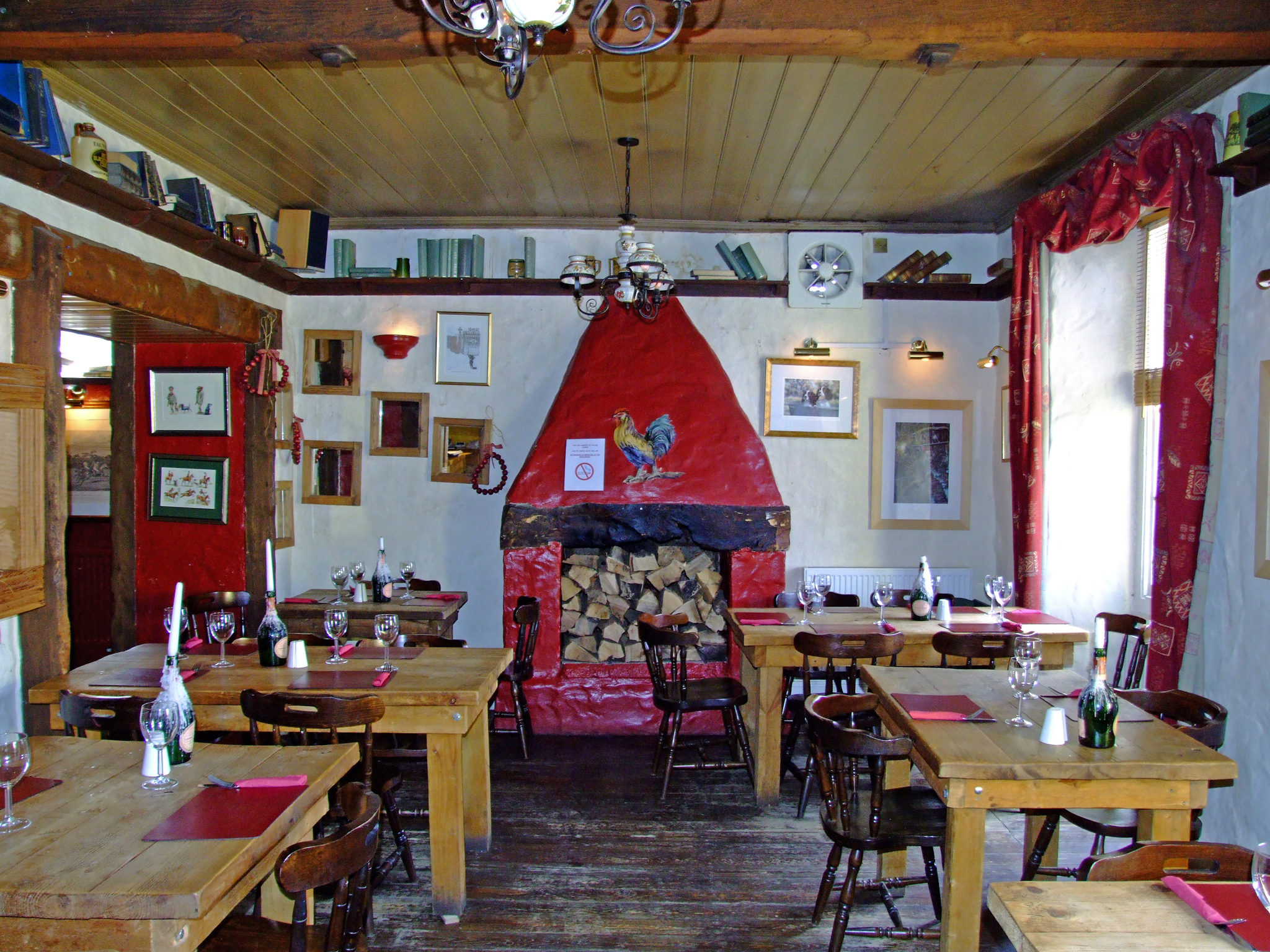
More on Welsh food and travel on our partner site Wales Britain Adventures.
Typical Scottish food
Haggis
Scotland's most famous dish. Haggis is made from minced sheep's offal mixed with oats, onions, spices and suet, traditionally cooked in a casing. It has a rich, peppery flavour and is commonly served with neeps and tatties (turnip and potato), especially on Burns Night on 25 January. Vegetarian haggis is widely available.
Scotch broth
A hearty soup made with lamb or beef, barley and root vegetables like carrots and leeks. It's thick, filling and perfect for cold weather – comfort food with deep rural roots.
Steak pie
A classic Scottish pie filled with slow-cooked beef in rich gravy, topped with pastry. Traditionally eaten on New Year's Day, but easy to find in bakeries and pubs all year.
Cullen skink
A traditional smoked haddock soup from the town of Cullen in north-east Scotland, creamy and thick with potatoes and onions. Despite the name, it has nothing to do with lizards – just very satisfying seafood comfort food.
Scottish shortbread
A buttery, crumbly biscuit made with just flour, sugar and butter. Simple but iconic, shortbread is shaped into fingers or wedges and served with tea – or bought as a souvenir.
Scotch pancakes (drop scones)
Small, thick, slightly sweet pancakes cooked on a griddle and served with butter and jam – a staple of Scottish breakfasts and afternoon tea.
Typical Northern Irish food
The Ulster fry
Northern Ireland's answer to the full English, and many say the better one: bacon, sausages, eggs and black or white pudding, with the essential difference of soda farls and potato bread fried in the pan.
Soda bread and potato bread
Soda bread is raised with bicarbonate of soda and buttermilk instead of yeast, and the flat quarters cooked on a griddle are called farls. Potato bread is made with mashed potato and flour – thin, soft and best fried.
Champ and Irish stew
Champ is mashed potato beaten with spring onions, milk and plenty of butter. Irish stew – lamb or mutton with potatoes, onions and carrots – is the farmhouse dish of the whole island.
Dulse and yellowman
Two treats tied to the Ould Lammas Fair in Ballycastle each August: dulse, a dried red seaweed eaten as a salty snack, and yellowman, a hard honeycomb toffee. See our hidden gems of Antrim and Down.
Tea, sugar, curry and jollof: the empire on the plate
The most British drink of all – a cup of sweet tea – combines two products of empire. Tea came from China and later from British-run plantations in India and Ceylon; sugar came from the Caribbean, grown and cut by enslaved Africans. By the 18th century sugar had turned from a luxury into a working-class necessity, and the fortunes made from it built docks, banks and country houses. Read London, sugar and slavery.
After 1945, people from the former colonies changed British food for good. South Asian families opened "Indian" restaurants – many actually run by Bangladeshis from Sylhet – and curry became a national dish; chicken tikka masala is often claimed as a British invention, with Glasgow among the cities laying claim. Caribbean jerk chicken, rice and peas and patties came with the Windrush generation. And in Peckham, Brixton, Woolwich and Tottenham, West African restaurants and market stalls serve jollof rice, suya, fufu, kelewele and pepper soup to a large Ghanaian and Nigerian community. See Brixton and Windrush Square and Ghanaians and Nigerians in Britain.
How working families ate
For most of British history, ordinary people did not eat roast beef and Wellington. In a small worker's house in the industrial towns of England and Wales in the early 20th century, the table was simple: bread and dripping, potatoes, a stew or broth stretched with barley and vegetables, bacon or a little meat on Sundays if the wages allowed, and endless cups of strong sweet tea. Many British dishes now sold as "comfort food" were born from that thrift.
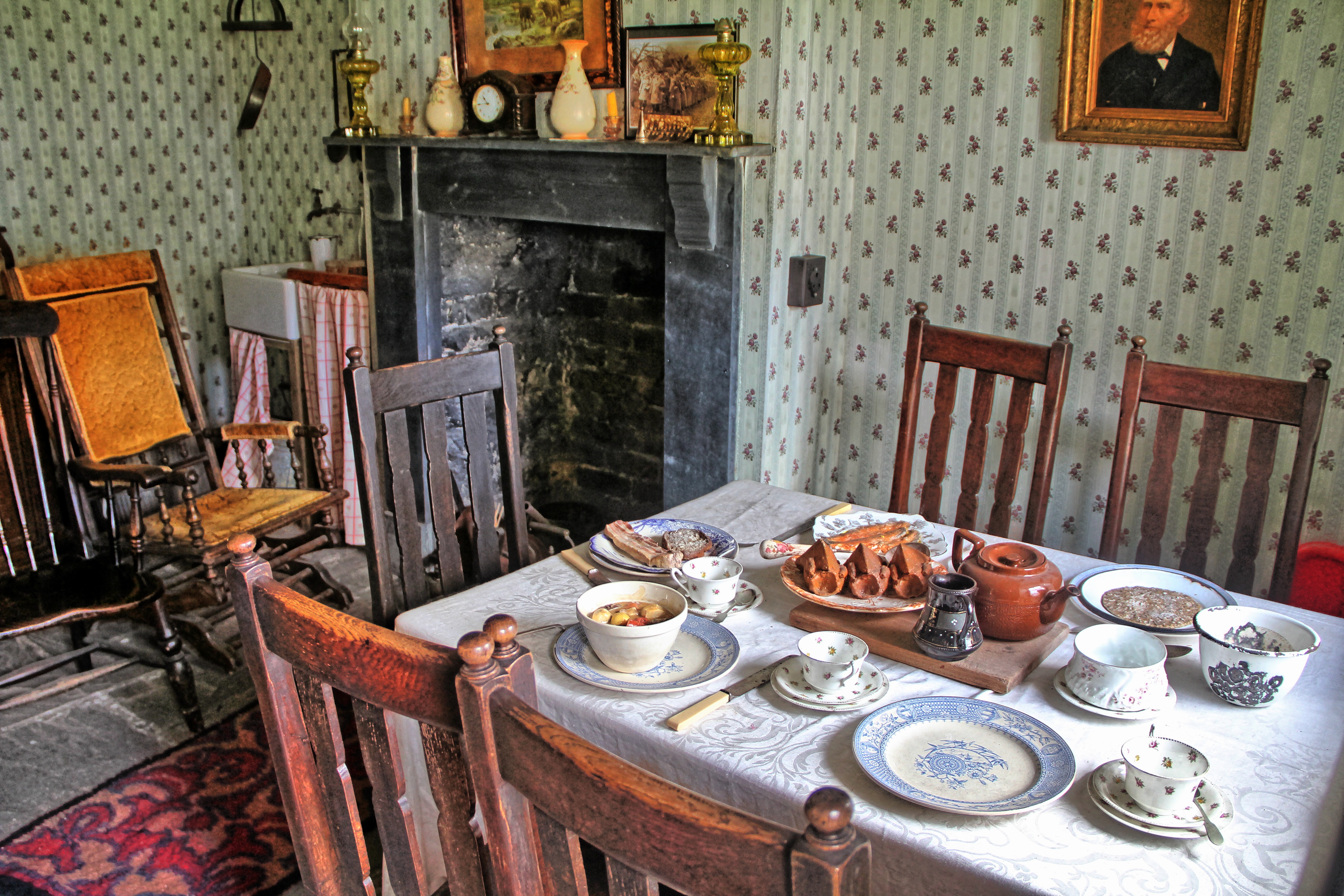
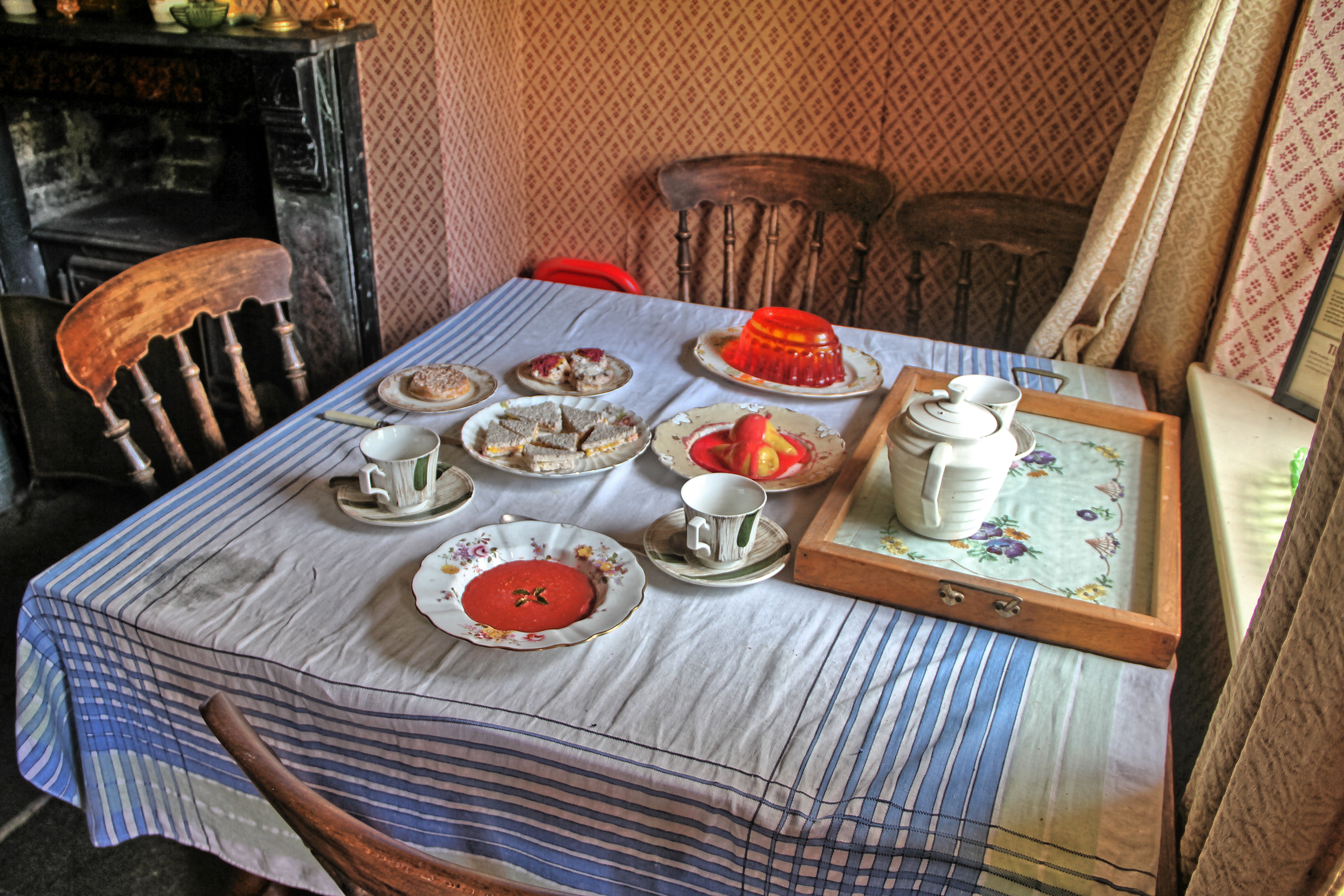
Rationing during and after the Second World War, from 1940 until 1954, shaped the way a whole generation cooked – and explains a good deal of the old jokes about British food.
Tips for eating out in Britain
- Pubs: in many pubs you order and pay at the bar and give your table number; there is no table service.
- Tipping: 10–12.5% in restaurants if service is not already on the bill; not expected at the bar or in cafés.
- Lunch is cheaper: many restaurants offer set lunch menus at a fraction of dinner prices.
- Markets: Borough Market in London, St George's Market in Belfast and covered markets across the country serve good, cheaper street food.
- Dietary needs: allergen information must be provided by law – ask the staff.
- Sunday: book the Sunday roast in advance, and note that kitchens often close by early evening.
Food tours
Food tours in London, Edinburgh and other cities take you through markets, pubs and bakeries – often the best way to taste many dishes in one afternoon.
Tours and experiences
Entrance fees are included in the tour price; tips are not included but are always welcome.
The African side of the story
Britain Adventures is an independent partner website. Our partner sites on Africa and its history are where the stories on this page continue:
- Pan-African: African Independence · Uganda · Egypt · Sierra Leone · All African Radio Stations
- Ghana: Ghana-Net · Cape Coast Castle · Elmina Castle · James Fort, Accra · They Made Ghana · War Cemetery Cape Coast
- Across Africa: Kenya Web News · Explore Nigeria · Gambia Vibes · Zambia Vibes
- European history: V2 Rocket and Peenemünde · Tannenberg Memorial
Search our Network. Start here.