
V2 Rockets on London 1944–1945: From Peenemünde to Chiswick
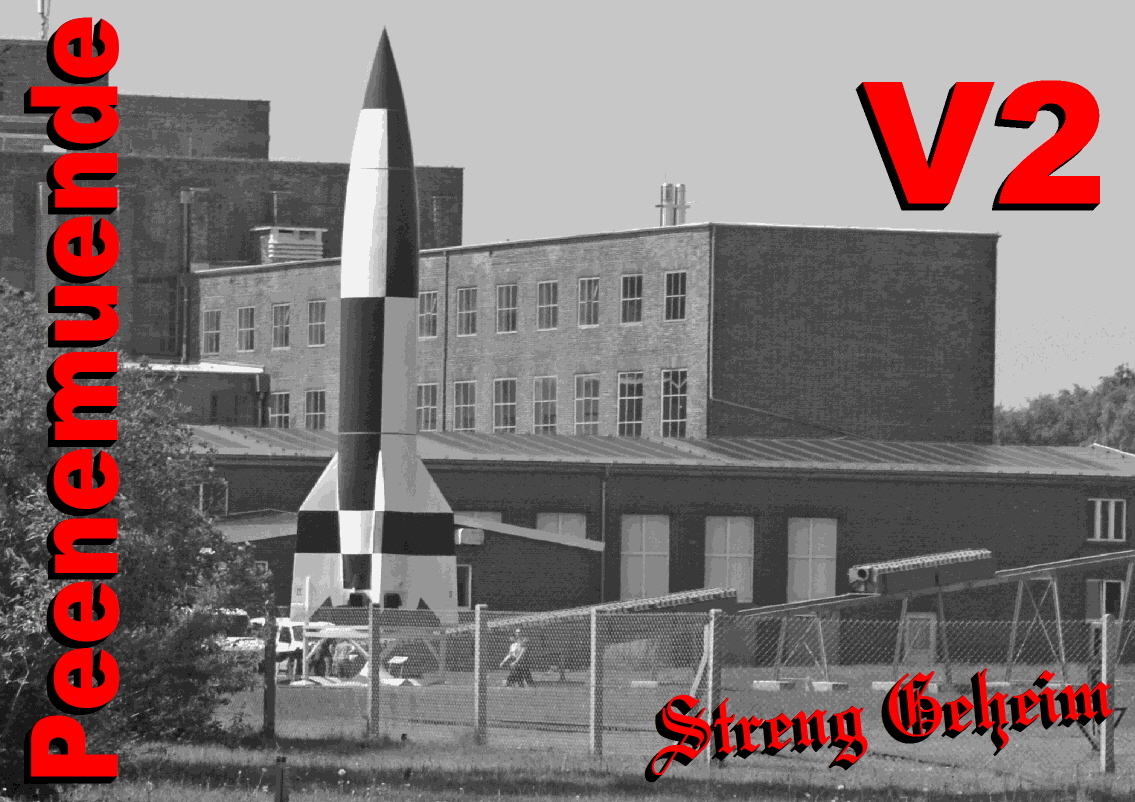
V2 rockets on London: from Peenemünde to Chiswick
At 6:44 on a Friday evening in September 1944, without a siren or any warning, a quiet suburban street in west London was torn apart by an explosion nobody could explain. It was the first V2 rocket to hit Britain: the world's first long-range ballistic missile, built on the Baltic coast of Germany by slave labourers, fired from a Dutch suburb, and arriving faster than the speed of sound.
Key facts
- First V2 on London: 8 September 1944, about 6:44 pm, Staveley Road, Chiswick; three killed
- Launched from: Wassenaar, a suburb of The Hague in the occupied Netherlands
- London's toll: an estimated 2,754 people killed and 6,523 seriously injured by V2s
- Worst strike: Woolworths, New Cross, 25 November 1944; 168 killed
- Last on London: Hughes Mansions, Stepney, 27 March 1945; 134 killed
- Defence: none. The rocket fell at several times the speed of sound and could not be seen or heard coming
Peenemünde: where the rocket was born
The V2, officially the A4, was developed at the army research centre of Peenemünde on the island of Usedom on Germany's Baltic coast. Under the young engineer Wernher von Braun, the rocket became the first man-made object to reach space, on a vertical test launch in June 1944. Hitler wanted it as a Vergeltungswaffe, a "weapon of revenge" for the Allied bombing of German cities. The "V" in V2 stands for that word.
Our partner site V2 Rocket and Peenemünde tells the German side of the story in full, with the test stands, the museum and the remains you can still visit on Usedom today.
Built by slaves
After the RAF bombed Peenemünde in August 1943, production moved underground into tunnels in the Kohnstein mountain near Nordhausen in the Harz: the Mittelwerk. The rockets were built there by prisoners of the Mittelbau-Dora concentration camp, in cold, dust and darkness, worked to exhaustion, beaten, and hanged for "sabotage". Historians estimate that more people died building the V2 than were killed by it in London, Antwerp and every other city it hit.
Chiswick, 8 September 1944
The day before, government minister Duncan Sandys had told journalists that, except possibly for a few last shots, "the Battle of London is over". The V1 flying bombs had been largely beaten. On the morning of 8 September the first V2 of the war was fired at Paris. That evening, two rockets rose from the pine-lined streets of Wassenaar, near The Hague. About five minutes later, the first came down on Staveley Road in Chiswick.
The explosion left a crater around 30 feet across and destroyed or damaged houses along the road. Three people were killed: Ada Harrison, aged 63, who ran a newsagent's near Chiswick station; three-year-old Rosemary Clarke; and Sapper Bernard Browning of the Royal Engineers, home on leave, aged 28. Around 17 people were seriously injured. Sapper Browning is buried in Chiswick New Cemetery, at the southern end of the same road.
The "gas main" cover story
The government did not want Germany to know where its rockets were landing, or the public to panic. The explosions were blamed on exploding gas mains, and Londoners soon started joking about "flying gas pipes". Only on 10 November 1944, two months later, did Winston Churchill admit in Parliament that Britain was under rocket attack.
The worst strikes
- New Cross, 25 November 1944: at 12:26 on a busy Saturday, a V2 hit the crowded Woolworths store on New Cross Road. 168 people were killed, many of them women and children queuing for a rare delivery of saucepans. It was the deadliest single V-weapon attack on Britain.
- Smithfield Market, 8 March 1945: a rocket fell on the meat market in the City and broke through into the railway tunnels below, killing more than a hundred people.
The east and north-east of London suffered most of all. In seven months about 1,358 rockets were aimed at London, and many more fell short across Essex, Kent and Hertfordshire.
The last rockets
As the Allies advanced through the Netherlands, the launch sites were overrun. The last V2 to hit London struck Hughes Mansions, a block of flats on Vallance Road in Stepney, at about 7:20 on the morning of 27 March 1945, killing 134 people, most of them Jewish families. Later that day another rocket fell in Orpington, Kent, killing 34-year-old Ivy Millichamp at her home in Kynaston Road. She is remembered as the last British civilian killed by enemy action in the war in Europe.
After the war
Wernher von Braun and many of his team surrendered to the Americans and were taken to the United States, where they built the rockets for the US space programme; von Braun led the development of the Saturn V that took astronauts to the Moon. The Mittelbau-Dora guards and some managers were tried; the engineers mostly were not. In October 1945 the British fired captured V2s from northern Germany in "Operation Backfire" to study them.
The rocket that terrorised London became the ancestor of every space launcher since. For more on the war and its memorials, visit our partner site on the Tannenberg Memorial.
Visit the V2 sites in London
- Staveley Road, Chiswick (W4): a black granite memorial at the eastern end of the road, near Burlington Lane, reads "The first V-2 rocket on London fell here, 8 September 1944, killing three". It was put up in 2004 by the Brentford & Chiswick Local History Society and the Battlefields Trust; on the same day Wassenaar unveiled a matching memorial at the launch site. Every year on 8 September a wreath is laid at 6:44 pm. Nearest station: Chiswick (trains from Waterloo). In spring the road is lined with cherry blossom.
- New Cross Road (SE14): two memorial plaques for the Woolworths victims, on the wall beside the entrance to the supermarket now on the site, near New Cross Gate station.
- Vallance Road, Whitechapel (E1): a memorial stone in the grounds of the rebuilt Hughes Mansions estate.
- Imperial War Museum London: a real V2 rocket is on display. See our guide to the Imperial War Museum London.
Tours and experiences
Second World War walking tours and history tours of London are available. Entrance fees are included in the tour price; tips are not included but are always welcome.
Read next
Our partner site on the rocket's birthplace on the Baltic coast.
See a real V2 and the stories of London at war.
The other side of Britain's Second World War.
More of England's history and places to visit.
The African side of the story
Britain Adventures is an independent partner website. Our partner sites on Africa and its history are where the stories on this page continue:
- Pan-African: African Independence · Uganda · Egypt · Sierra Leone · All African Radio Stations
- Ghana: Ghana-Net · Cape Coast Castle · Elmina Castle · James Fort, Accra · They Made Ghana · War Cemetery Cape Coast
- Across Africa: Kenya Web News · Explore Nigeria · Gambia Vibes · Zambia Vibes
- European history: V2 Rocket and Peenemünde · Tannenberg Memorial
Search our Network. Start here.
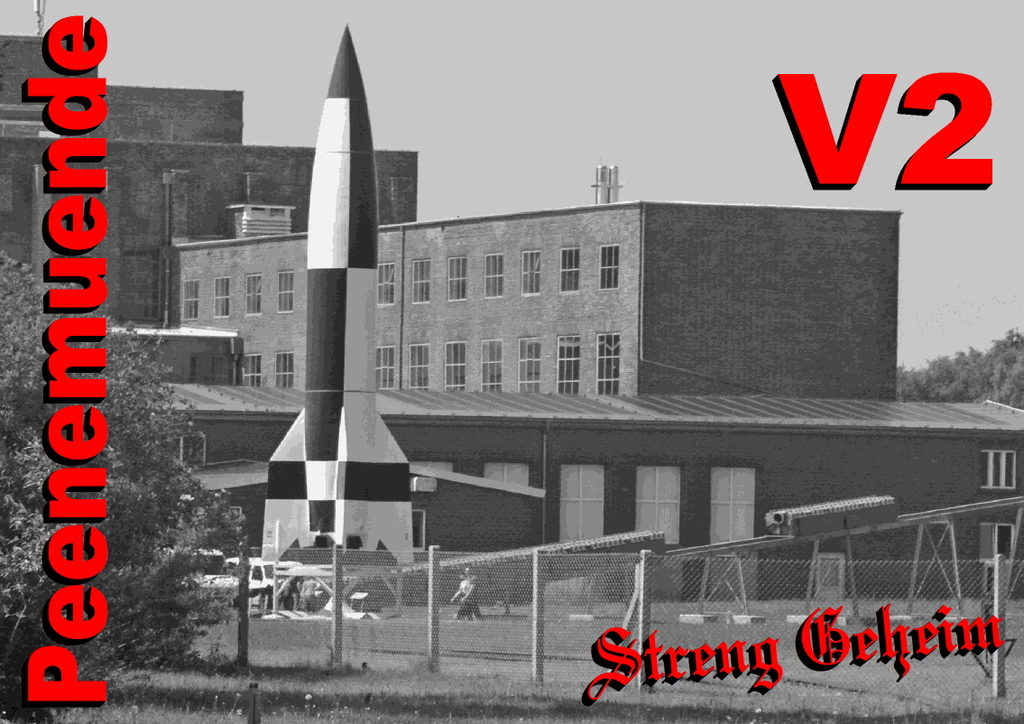
V2 Rocket at the original launch side, Peenemuende, Island of Usedom, museum, Germany photography and artwork by Remo Kurka