Getting around London: Tube, buses, river boats, airports and districts
London's transport is one of the best in the world, and one of the most confusing on your first day. Here is how it really works: when the Tube runs and when it doesn't, why you should never buy a paper ticket, how to cross the Thames for free, how to reach the six airports and which district is which. For the sights and the history, go to our main London travel guide.
Key facts
- Pay with: a contactless bank card or phone, or an Oyster card. Buses do not take cash
- Tube single, Zone 1: £3.10 peak, £3.00 off-peak (pay as you go, since March 2026)
- Bus single: £1.85 since November 2026, with unlimited changes within an hour (the Hopper fare); daily bus cap £5.55
- Tube hours: roughly 5:00 to just after midnight; all night on Fridays and Saturdays on five lines
- Plan and check: use the official TfL website or the TfL Go app. Weekend engineering closures are common
How to pay: tap, don't buy tickets
Forget paper tickets. Touch the same contactless bank card, or the same phone, on the yellow reader when you enter and when you leave every station, and on entry only on buses. The system works out the cheapest fare and stops charging when you reach the daily cap, and on contactless also a weekly cap from Monday to Sunday. Caps for Zones 1 to 6 are frozen until March 2027.
- Use one card per person, and always the same card or phone; mixing them breaks the capping.
- Always touch out at stations, or you are charged the maximum fare.
- Foreign cards work, but check your bank's fee per transaction. An Oyster card avoids that; visitors can buy one at stations.
- Peak times are weekdays roughly 6:30 to 9:30 and 16:00 to 19:00; off-peak is cheaper.
The Tube (London Underground)
Eleven lines, each with its own colour, serve around 270 stations. Trains on the central lines come every two to four minutes, so you never need a timetable. The network is divided into fare zones from 1 (centre) to 9; most visitors stay in Zones 1 and 2.
- Hours: first trains around 5:00 (later on Sundays), last trains around midnight to 00:30, depending on line and station.
- Weekend closures: parts of lines often close for engineering on Saturdays and Sundays, with replacement buses. Check before you set off.
- Strikes: they happen; follow the news and TfL's status page.
- Step-free access: many older stations have only stairs; the TfL step-free map shows which have lifts.
- Etiquette: stand on the right on escalators, let people off first, and take off your backpack in busy trains.
London at night
The Night Tube runs all through Friday and Saturday nights on five lines: the Central, Jubilee, Northern, Piccadilly and Victoria, though not over the full length of every line. A section of the London Overground, the Windrush line between Highbury & Islington and New Cross Gate, also runs all night on those nights. Trains run about every 10 to 20 minutes and off-peak fares apply.
From Sunday to Thursday the Tube stops around midnight and night buses take over. Their route numbers start with N, and some daytime routes run 24 hours. Night buses are slower but cover all of London.
The Elizabeth line, the Overground and the DLR
- Elizabeth line: London's newest railway, fast and air-conditioned, running east–west under the centre from Heathrow and Reading to Shenfield and Abbey Wood, via Paddington, Bond Street, Tottenham Court Road, Liverpool Street and Canary Wharf.
- London Overground: six orbital lines, renamed in 2024 as the Lioness, Mildmay, Windrush, Suffragette, Weaver and Liberty lines. They are useful for Shoreditch, Dalston, Hackney and Crystal Palace.
- DLR (Docklands Light Railway): driverless trains through the Docklands to Canary Wharf, Greenwich, London City Airport and Woolwich. Sit in the front seats for a free sightseeing ride.
- National Rail: suburban trains, such as Thameslink and Southern, cross the city too; contactless works on most routes within London.
Buses
London's red buses are the cheapest way to see the city. A single journey costs one flat fare however far you go, and with the Hopper fare you can change to other buses or trams within an hour without paying again. Buses do not take cash: tap your card or phone on entry only. All buses are wheelchair accessible.
- Sightseeing routes: route 11 (Liverpool Street, St Paul's, Strand, Trafalgar Square, Westminster, Chelsea), route 15 (Tower of London to Trafalgar Square) and route 24 (Hampstead, Camden, Trafalgar Square, Westminster). Sit upstairs at the front.
- Request stops: press the bell to get off, and wave to stop the bus at a request stop.
- Bus stops: each has a letter code shown on the TfL map; use it in the app to find the right side of the road.
River boats and ferries
- Uber Boat by Thames Clippers: the river bus, calling at around two dozen piers from Putney in the west through Westminster, Bankside, London Bridge, Tower, Canary Wharf and Greenwich to Woolwich and Barking Riverside in the east. The main route, RB1, runs daily from early morning to late evening. Pay by contactless or Oyster at the pier, or book in the app. It is faster than many sightseeing cruises, and the views are the same.
- Sightseeing cruises: slower boats with commentary leave from Westminster, Embankment and Tower piers.
- Woolwich Ferry: a free car and foot ferry across the Thames between Woolwich and North Woolwich, run by TfL. Free, but not very scenic.
- Greenwich and Woolwich foot tunnels: Victorian tunnels under the Thames, free to walk at any time.
Cable car, trams, bikes and taxis
- The cable car (IFS Cloud Cable Car): crosses the Thames high above the water between North Greenwich, by the O2, and the Royal Docks, near ExCeL. More a ride with a view than real transport.
- Trams: London Trams run in south London around Croydon, Wimbledon and Beckenham. Bus fares and the Hopper apply.
- Hire bikes: TfL's docking-station bikes can be rented with a bank card or the app, and cycle lanes now run across much of the centre. E-bikes from private companies are left on the street.
- Black cabs: licensed taxis can be hailed when the orange light is on; the drivers have passed "the Knowledge", a test on every street in London. Minicabs and app taxis must be booked, never taken from the street.
London's six airports
- Heathrow: Heathrow Express to Paddington in 15 minutes, the Elizabeth line through central London, or the Piccadilly line, slowest and cheapest.
- Gatwick: Gatwick Express to Victoria, or Thameslink and Southern trains.
- Stansted: Stansted Express to Liverpool Street.
- Luton: the DART shuttle to Luton Airport Parkway, then trains to St Pancras.
- London City: open and the closest to the centre, in the Docklands, on the DLR to Canary Wharf and Bank.
- Southend: small, with trains to Liverpool Street.
Times, routes and which airport to choose: our UK airports guide.
The districts of London
Greater London is made up of 32 boroughs plus the City of London, the old Roman and medieval square mile, which has its own Lord Mayor and police. The areas visitors use most:
- Westminster: Parliament, Big Ben, Westminster Abbey, Buckingham Palace, St James's Park.
- The West End: Covent Garden, Soho, Leicester Square and Oxford Street: theatres, shops, restaurants.
- The City of London: St Paul's Cathedral, the Bank of England and the towers of finance; quiet at weekends.
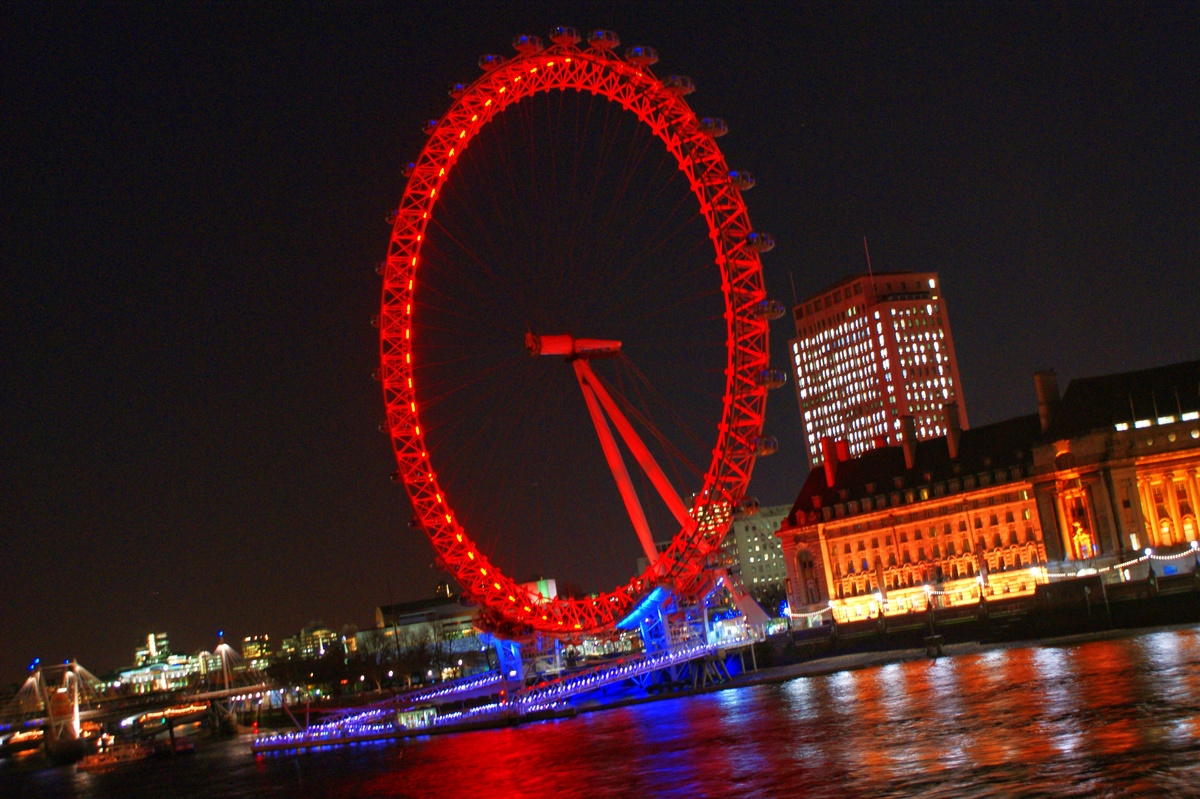
- The South Bank and Southwark: the London Eye, Tate Modern, Shakespeare's Globe and Borough Market.
- Bloomsbury: the British Museum, the university quarter and Georgian squares.
- Kensington and Chelsea: the South Kensington museums, Hyde Park, Kensington Palace and expensive shopping.
- Camden and Islington: markets, music, pubs and canal walks.
- Shoreditch and Hackney: street art, nightlife, Brick Lane and its curry houses.
- Brixton: the heart of Caribbean and African London; see Brixton, Windrush Square and the Black Cultural Archives.
- Peckham: south London's West African high street, full of Nigerian and Ghanaian shops and restaurants.
- The Docklands and Canary Wharf: the old docks, now a financial district, with the Museum of London Docklands.
- Greenwich: the Royal Observatory, the Cutty Sark and the Prime Meridian.
- Stratford: the Olympic Park and Westfield shopping centre.
Tours and passes
Bus tours, river cruises and walking tours are an easy way to see the city before using public transport. Entrance fees are included in the tour price; tips are not included but are always welcome.
Read next
Our main London guide: the sights, the areas and the hidden history.
Money, safety and the unwritten rules.
Museums, ceremonies, views and parks that cost nothing.
Every airport and how to get into town.
The African side of the story
Britain Adventures is an independent partner website. Our partner sites on Africa and its history are where the stories on this page continue:
- Pan-African: African Independence · Uganda · Egypt · Sierra Leone · All African Radio Stations
- Ghana: Ghana-Net · Cape Coast Castle · Elmina Castle · James Fort, Accra · They Made Ghana · War Cemetery Cape Coast
- Across Africa: Kenya Web News · Explore Nigeria · Gambia Vibes · Zambia Vibes
- European history: V2 Rocket and Peenemünde · Tannenberg Memorial
Search our Network. Start here.