The Tower of London: an honest guide
Nine and a half centuries of royal power in one fortress: a Norman keep, a prison, a place of execution, a mint, a zoo and the home of the Crown Jewels. It is expensive, crowded and absolutely worth it if you do it right. And in the Jewel House, behind the glass, sits a diamond dug out of South Africa that tells a story the official tour rarely tells.
Key facts
- Tickets: adult £37; child 5–15 £18.50; under 5s free; disabled concession £29.50 with a free carer; £1 for people on Universal Credit and other named benefits
- Included: the Crown Jewels, the White Tower, the Medieval Palace, the Wall Walks and the Yeoman Warder tours
- Time needed: at least two hours, ideally three
- Opening hours: change with the seasons; last entry is usually an hour before closing
- Getting there: Tower Hill Underground, Tower Gateway DLR, or the river boat to Tower Pier
The history: 950 years of power and fear
William the Conqueror began the Tower after his invasion of 1066 to hold down the conquered city of London. His great stone keep, the White Tower, still stands at the centre. Over the centuries the fortress grew into a royal palace, an armoury, the Royal Mint, a record office and, for 600 years, a zoo, the Royal Menagerie, whose lions and other animals were moved to London Zoo in the 1830s.
It is best remembered as a prison and a place of death. Two of Henry VIII's wives, Anne Boleyn and Catherine Howard, and the young Lady Jane Grey were beheaded inside its walls. Princes disappeared here, traitors were tortured here, and prisoners carved their names into the stone of the Beauchamp Tower, where you can still read them.
What to see
- The Yeoman Warder tour: the famous "Beefeaters" are retired senior soldiers who live inside the Tower. Their tours, included in your ticket, are funny, gory and the best introduction. Join one early: the last tour of the day leaves in the early afternoon.
- The White Tower: royal armour, including Henry VIII's, and the Norman chapel.
- The Bloody Tower and Beauchamp Tower: prison stories and the prisoners' graffiti.
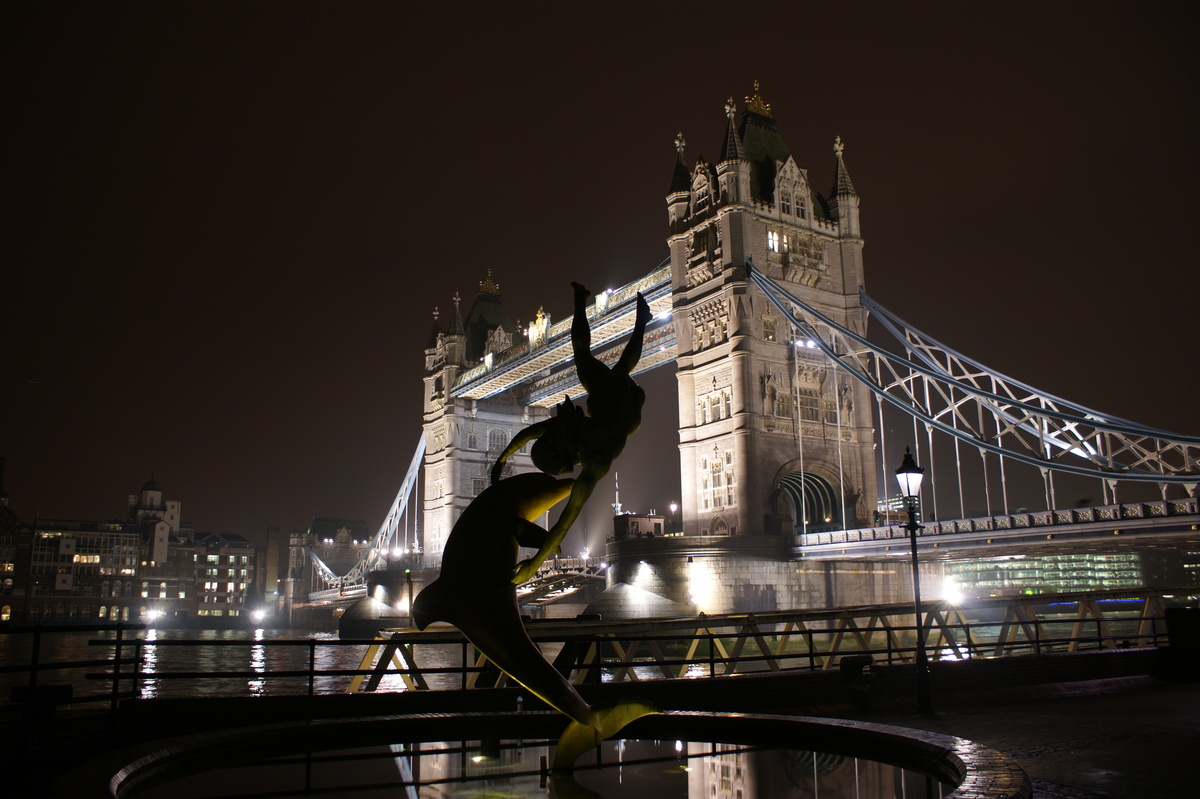
- The Wall Walks and the Medieval Palace: quieter, with views of Tower Bridge.
- The ravens: legend says the kingdom will fall if they leave. At least six are kept, with a spare.
The Crown Jewels
Kept in the Jewel House since the 17th century, the Crown Jewels are a working collection still used at coronations and the State Opening of Parliament. You pass on a moving walkway past St Edward's Crown, used at every coronation since 1661, the Imperial State Crown and the Sovereign's Sceptre with Cross. No photography is allowed inside. The queue is worst between late morning and mid-afternoon in summer.
Africa's diamond, and the empire in the Jewel House
The largest stone in the Sovereign's Sceptre is Cullinan I, also called the Great Star of Africa, of about 530 carats. It was cut from the Cullinan diamond, the largest gem-quality rough diamond ever found, dug out of the Premier Mine near Pretoria in 1905, in what was then the British-ruled Transvaal, three years after the South African War. The colonial government of the Transvaal bought the stone and presented it to King Edward VII in 1907. Cullinan II sits in the Imperial State Crown.
The diamond was found on land taken from Africans, and mined by African workers on low wages and in harsh conditions. In South Africa there have been repeated calls for the Cullinan stones to be returned. Nearby in the Jewel House, the Koh-i-Noor, taken from the Punjab after Britain annexed it in 1849, is claimed by India, Pakistan and others. The Tower displays these stones as royal treasures; how they came to London is part of the history of empire.
Read the background on our pages Britain and South Africa and Benin Bronzes, Asante gold and African treasures in British museums.
The Ceremony of the Keys
Every night for centuries, the Chief Yeoman Warder and an armed escort have locked the gates of the Tower in the Ceremony of the Keys. A small number of visitors can watch. It used to be almost free; the price has risen, but it is still cheap for what it is. Tickets are released in advance and sell out quickly, so book through Historic Royal Palaces as soon as booking opens for your dates.
How to do it right
- Book online and arrive at opening time.
- Go straight to the Crown Jewels before the queue builds.
- Then join a Yeoman Warder tour from the main entrance.
- Explore the White Tower, the prison towers and the Wall Walks in the afternoon, when the crowds are at the Jewel House.
- Finish at Tower Bridge next door, or walk to St Katharine Docks for lunch.
The verdict
At £37 the Tower is one of London's most expensive sights, and one of the few really worth the money: you get a castle, a prison, a palace, the Crown Jewels and some of the best storytellers in Britain in one ticket. Skip it if you are on a tight budget: our free things to do in London guide has plenty of alternatives. Otherwise, go early and give it a full morning.
Tours and experiences
Many London tours include the Tower with skip-the-line entry. Entrance fees are included in the tour price; tips are not included but are always welcome.
Read next
More treasures of empire, and the arguments over them.
The best of the city for nothing.
Where to stay and what to see.
The African side of the story
Britain Adventures is an independent partner website. Our partner sites on Africa and its history are where the stories on this page continue:
- Pan-African: African Independence · Uganda · Egypt · Sierra Leone · All African Radio Stations
- Ghana: Ghana-Net · Cape Coast Castle · Elmina Castle · James Fort, Accra · They Made Ghana · War Cemetery Cape Coast
- Across Africa: Kenya Web News · Explore Nigeria · Gambia Vibes · Zambia Vibes
- European history: V2 Rocket and Peenemünde · Tannenberg Memorial
Search our Network. Start here.