Tiger Bay: Cardiff's African and Somali Seamen
The coal docks of Cardiff drew sailors from more than 50 nations. Somalis, Yemenis and West Africans built a community here, and Britain spent decades treating them as aliens.
Most visitors to Cardiff today see a smart waterfront: the Senedd, the Wales Millennium Centre, restaurants on Mermaid Quay. The tourist signs call it Cardiff Bay. For more than a hundred years the people who lived here called it something else: Tiger Bay, the docks and the streets of Butetown behind them.
Tiger Bay is the oldest multi-ethnic community in Wales. Sailors and workers from more than 50 countries settled here, and among the largest groups were men from Africa and Arabia: Somalis, Yemenis, West Africans and Caribbeans who crewed the ships that carried Welsh coal around the world. They married local women, raised families, opened cafés and boarding houses, built a mosque, and made a neighbourhood. The British state then spent much of the 20th century treating them as foreigners in their own empire. This page tells the honest story and shows you what is left to see.
Tiger Bay in key facts
- Where: Butetown and the old Bute Docks, south of Cardiff city centre.
- First dock: the West Bute Dock, opened in October 1839 by the 2nd Marquess of Bute.
- Coal: about 2 million tons exported in 1862; more than 10 million tons at the peak in 1913.
- People: seafarers and workers from more than 50 nations, including Somalis, Yemenis, West Africans, Caribbeans, Norwegians, Greeks, Spaniards, Italians and Irish.
- Hard years: the race riots of June 1919 and the Coloured Alien Seamen Order of 1925.
- End of the coal port: coal exports stopped in 1964; the old streets were cleared in the 1960s.
- Famous children: Dame Shirley Bassey and the rugby league star Sir Billy Boston.
Coal, the Butes and a castle
In 1801 Cardiff was a small town of about 6,000 people. A hundred years later it had around 173,000, and the reason was coal. The valleys to the north, the Rhondda, Merthyr and the rest, produced steam coal that the world's navies and merchant fleets wanted, and it all had to go out by sea.
The landowner who made it possible was the 2nd Marquess of Bute. He paid for the West Bute Dock, which opened in October 1839, and the Taff Vale Railway brought the coal down to it two years later. More docks followed: the East Bute Dock, Roath Basin, Roath Dock and the Queen Alexandra Dock. By the 1880s Cardiff was handling more coal than any other port in the world. The new district around the docks was named after the family: Butetown.
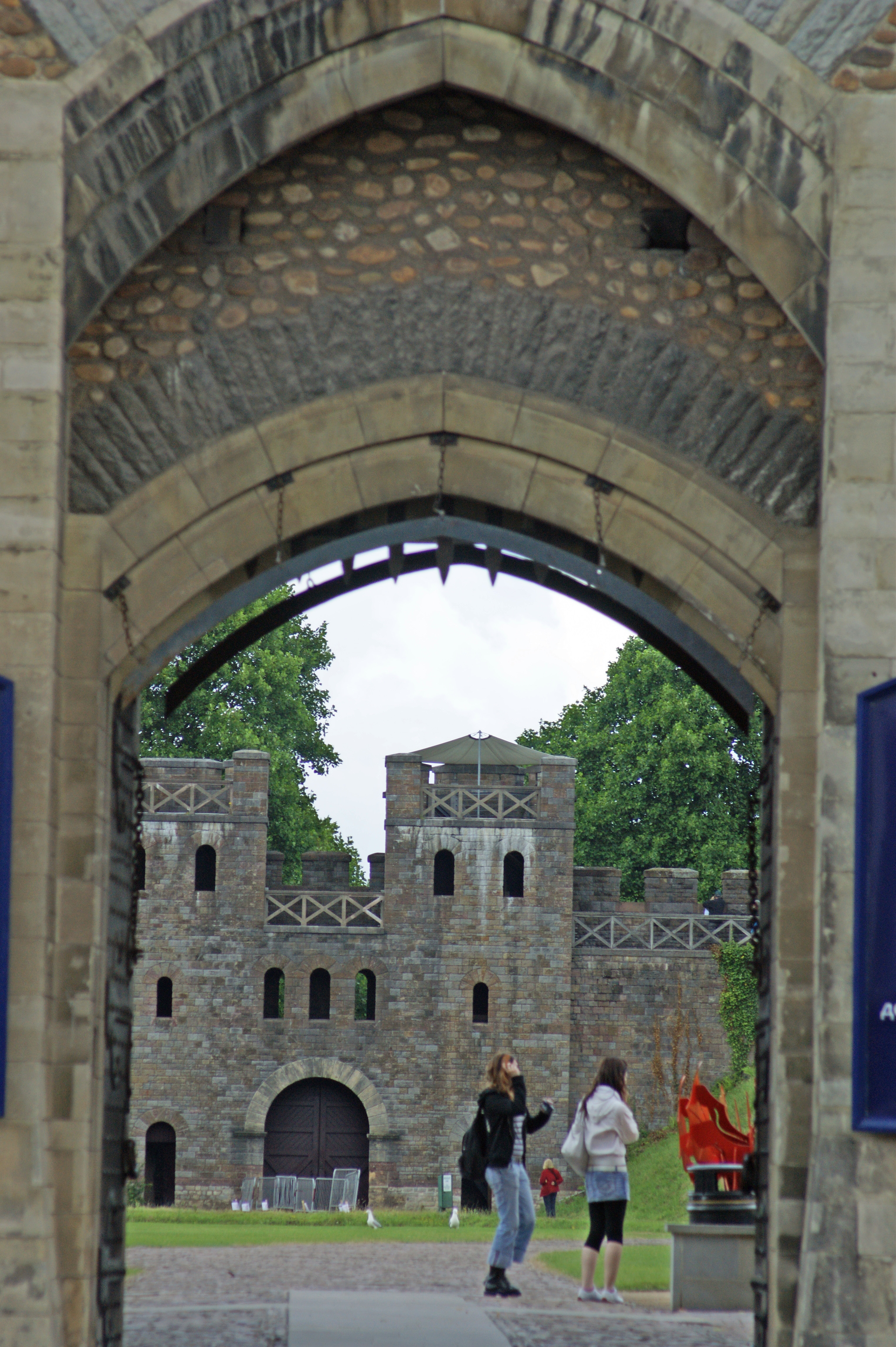
The money did not stay in the docks. In 1865 the 3rd Marquess, among the richest men in Britain, hired the architect William Burges to turn Cardiff Castle into a Victorian Gothic fantasy, with an Arab Room, a Banqueting Hall and a Clock Tower decorated in gold. When you walk through the castle gate, you are walking into the profits of the coal trade. The men who stoked the ships' boilers in Tiger Bay lived very differently.
The seamen: Somalis, Yemenis and West Africans
Coal ships needed firemen and trimmers: the men who shovelled coal into the furnaces and moved it around the bunkers, in fierce heat below deck. It was the hardest and worst-paid work on board, and shipping companies often filled it with men from the empire.
- Somalis came mostly from British Somaliland, joining ships at Aden and Berbera.
- Yemenis came through Aden, a British colony and one of the great coaling stations on the route to India.
- West Africans from Sierra Leone, the Gold Coast and Nigeria came on the ships of the West Africa trade, many of them Kru seamen from the Liberian and Sierra Leonean coast.
- Caribbeans came from Jamaica, Barbados, Trinidad and the other islands.
The First World War made them more important, not less. Recruitment for the army left the ports short of sailors, and more men from the colonies were taken on and settled in Cardiff. Many served on merchant ships that were torpedoed. By 1919 Butetown had a settled Black and Arab population, with wives, children, boarding houses and businesses.
Life in the Bay
Tiger Bay had a rough name in the newspapers: sailors' bars, fights, a red-light district. The people who grew up there remember something else, a neighbourhood where a Somali, a Welsh woman, a Greek shopkeeper and a Barbadian docker lived on the same street and their children went to the same school. Mixed marriages were common here long before they were accepted anywhere else in Britain.
The community built its own institutions. Boarding-house keepers looked after seamen between voyages and helped them find a ship. Arab cafés served as restaurant, hostel and prayer room at once. One of the best remembered was the Cairo Café, run from the 1940s until 1968 by a Yemeni sailor, Ali Salaman, and his Welsh wife, Olive, which was a restaurant, a boarding house and a mosque. By the 1940s Caribbeans had their own café and club on Bute Road.
The Second World War brought the seamen back into demand and brought German bombs down on the docks. After the war came the generation the world now knows. Shirley Bassey was born in Tiger Bay on 8 January 1937, the youngest child of a Nigerian seaman and an English mother, and became the voice of three James Bond theme songs. Billy Boston, born in Angelina Street in 1934 to a merchant seaman from Sierra Leone and a mother from Cardiff's Irish community, dreamed of playing for Cardiff and Wales. Cardiff's rugby union club ignored him. In 1953 Wigan signed him, and he became one of the greatest rugby league players of all time, scoring 478 tries in 488 games for the club. He was knighted, and died in 2026 at the age of 92.
1919: the riots
In June 1919, with the war over, the soldiers home and jobs scarce, white crowds attacked the Black and Arab residents of Butetown. For four days, from 11 to 14 June, mobs marched on Bute Street, attacked lodging houses and restaurants, and were met by men who barricaded their streets and defended their homes. Three men died in Cardiff. A 21-year-old ship's fireman, Mohammed Abdullah, was killed when a lodging house on Bute Street was attacked.
Similar riots hit Newport, Barry and Liverpool in the same weeks. We tell the full story on its own page: The 1919 race riots in Cardiff, Newport and Liverpool.
Made into aliens: the 1925 order
After the riots the government did not protect the seamen. It tried to get rid of them. Between 1919 and 1921 an estimated 3,000 Black and Arab seamen and their families were sent away from Britain under a repatriation scheme. Then came the paperwork.
On 18 March 1925 the Home Secretary made the Special Restriction (Coloured Alien Seamen) Order. In law it applied only to "alien" seamen. In practice, every "coloured" seaman who could not produce documents proving he was British had to register with the police as an alien. Sailors were not required to carry passports, and the papers of Black seamen were often not accepted. In Cardiff the police treated almost every Black and Arab seaman as an alien, whatever he could prove. Men born in British colonies, who had served on British ships in the war, were told they were foreigners. Without a British identity they could be refused a berth and threatened with deportation, and their families were pushed into poverty.
The order covered the ports of Cardiff, Newport and Swansea as well as Liverpool, Salford, South Shields, Hull and others. The Cardiff Coloured Association protested, and the matter reached Parliament in December 1925, where the Home Secretary insisted that "no British subject is required to register". The seamen's experience said otherwise. The historian Laura Tabili has called the order the first case of state-sanctioned race discrimination inside Britain to come to wide public notice.
Mahmood Mattan: hanged for a crime he did not commit
The worst injustice of Tiger Bay came in 1952. On 6 March that year a shopkeeper, Lily Volpert, was murdered in her outfitters' shop in the docks. Within hours the police arrested Mahmood Hussein Mattan, a former merchant seaman born in British Somaliland in 1923, who lived in Tiger Bay with his Welsh wife Laura and their three sons.
He was convicted mainly on the word of one prosecution witness, who had been offered a reward. His own lawyer described him to the jury in openly racist terms. On 3 September 1952 Mattan was hanged at Cardiff Prison, the last man executed there. He was 28.
His family fought for 46 years to clear his name. On 24 February 1998 the Court of Appeal quashed the conviction, the first case referred by the new Criminal Cases Review Commission to be overturned. The family received compensation, but it took until September 2022, 70 years after the hanging, for South Wales Police to apologise and admit the prosecution was flawed. The Somali-British writer Nadifa Mohamed told his story in her novel The Fortune Men (2021).
Cleared away
Coal exports from Cardiff ended in 1964. In the same decade the council cleared the old terraced streets of Tiger Bay and moved families into new estates and tower blocks. Many residents saw it as the destruction of their community, not its improvement.
From the late 1980s the docks were rebuilt as "Cardiff Bay": a barrage, offices, the Senedd, the Millennium Centre, restaurants and flats. The Welsh Industrial and Maritime Museum on Bute Street was demolished in the 1990s to make room for the Mermaid Quay development. Even the name went: Tiger Bay was pushed out in favour of Cardiff Bay. Local people still point out the divide between the waterfront and the estates of Butetown a few hundred metres away.
The community fought to keep its memory. The Butetown History and Arts Centre, founded in 1988 by the American scholar Glenn Jordan with local residents, collected oral histories and photographs of the old Bay for almost thirty years before it announced in 2016 that it would have to close its doors. Local historians such as Neil Sinclair, born in Tiger Bay in 1944, wrote its story in their own words.
Visiting Tiger Bay today
A walk from the castle to the Bay
- Cardiff Castle, Castle Street: start with the Butes' fortune. The 5th Marquess gave the castle to the people of Cardiff in 1947, and it is now owned and run by Cardiff Council. Open every day: in winter (November to February) from 10:00 on weekdays and 09:00 at weekends to 17:00; in summer (March to October) until 18:00. Last entry one hour before closing. Check cardiffcastle.com for event closures.
- Bute Street: walk south, or take the short train ride from Cardiff Queen Street to Cardiff Bay station. Bute Street was the main road of Tiger Bay and the scene of the 1919 riots.
- Mount Stuart Square: the old business heart of the docks, with the Coal Exchange, where coal prices for the world were once set.
- The Pierhead Building: the red-brick former offices of the Bute Dock Company. Entry is free, and it has an exhibition on life in Tiger Bay from the 1880s to the 1950s.
- The Norwegian Church: the white wooden seamen's church of 1868, rebuilt nearby in 1992 with materials from the original. Roald Dahl was baptised in it. Today it is an arts centre and café.
- Landsea Square, Cardiff Bay: the bronze statue of three Welsh rugby league greats, Billy Boston, Clive Sullivan and Gus Risman, unveiled in 2023.
- Cathays Cemetery: north of the centre, where Mohammed Abdullah, killed in the 1919 riots, is buried.
Butetown is a living residential neighbourhood, not an open-air museum. Walk through it with respect, and you will find Somali, Yemeni and Caribbean shops and cafés that carry the old Bay into the present. For more on Wales, see our sister site Wales Adventures.
Tours and experiences
Cardiff is about two hours from London by train, and Cardiff Castle and the Bay are often combined on day tours from London that also visit Bath or the Cotswolds. Entrance fees for the sights on a tour are always included in the price. Tips for your guide are not included, but they are welcome.
Where the seamen came from
- British Somaliland: the forgotten protectorate, the home of Mahmood Mattan and many Tiger Bay seamen.
- Explore Nigeria: the country of Shirley Bassey's father.
- Sierra Leone: the home of Billy Boston's father, and of many Kru seamen.
- African Independence: our pan-African site.
Read next
The summer when the ports turned on their Black and Arab seamen.
The West African sailors of the British merchant fleet.
Another Welsh castle, another fortune from the empire.
The other great port with an old Black community.
The African communities that came after.
The African side of the story
Britain Adventures is part of a network of independent sites on Africa and its history. These are the places where the stories on this page continue:
- Pan-African: African Independence · Uganda · Egypt · Sierra Leone · All African Radio Stations
- Ghana: Ghana-Net · Cape Coast Castle · Elmina Castle · James Fort, Accra · They Made Ghana · War Cemetery Cape Coast
- Across Africa: Kenya Web News · Explore Nigeria · Gambia Vibes · Zambia Vibes
- European history: V2 Rocket and Peenemünde · Tannenberg Memorial
Search our Network. Start here.