
Castles of England
Castles of England – A Region-by-Region Honest Guide
From the Tower of London to Bamburgh: over 40 English castles, who runs them, what they cost, which are free – and how the word "castle" travelled to the slave forts of the Gold Coast.
Why England has so many castles
Castles in England are, above all, the story of an occupation. When William of Normandy won at Hastings in 1066, a few thousand Norman knights had to control a country of perhaps two million people who did not want them. Their answer was the castle: first quick earth mounds with a wooden tower (the "motte and bailey"), then, within a generation, great stone keeps such as the White Tower in London, Colchester and Rochester. They were not romantic. They were barracks, prisons, tax offices and statements of who was now in charge.
Over the next 500 years castles grew, changed and decayed with English politics: frontier fortresses on the Scottish and Welsh borders, luxurious palaces for barons and kings, coastal artillery forts built by Henry VIII against France. The English Civil War of the 1640s finished many of them – Parliament "slighted" royalist castles with gunpowder so they could never be used again, which is why so many stand as ruins today.
- How many: historians count well over 1,500 castle sites in England, from grass-covered mounds to complete palaces.
- The big three operators: English Heritage (most ruins), the National Trust (many complete houses and some ruins), and private owners (Warwick, Alnwick, Bamburgh, Leeds).
- Typical prices: about £8–20 for a staffed English Heritage ruin, roughly £20–30 for the big-name sites, more for royal and commercially run castles. Booking online is usually cheaper.
- Season: many sites cut opening days from November to March – some open only at weekends in winter.
This post covers England region by region. For Wales, which has the densest concentration of castles in Europe, see our Castles of Britain guide; for our ranking of the very best, see the top 10 must-see castles in England.
Who runs them – and why it matters for your wallet
English Heritage is a charity that looks after over 400 state-owned historic sites, including Dover, Kenilworth, Tintagel and Stonehenge. Members get in free; there is a short-term Overseas Visitor Pass for tourists, and some unstaffed ruins are free for everyone. English Heritage now uses peak, standard and off-peak pricing, so the same castle costs more on a summer Saturday than on a wet Tuesday in March.
The National Trust owns castles such as Corfe, Bodiam, Lindisfarne and Dunstanburgh (the latter managed with English Heritage). Membership also covers its stately homes, gardens and coastline car parks.
Private owners include aristocratic families who still live in their castles (the Percys at Alnwick, the Armstrongs at Bamburgh) and companies: Warwick Castle is run by the attractions group Merlin Entertainments, with prices and shows to match. Royal castles – the Tower of London and Windsor – are run by charities and the Royal Collection and are among the most expensive tickets in Britain.
London and the South-East
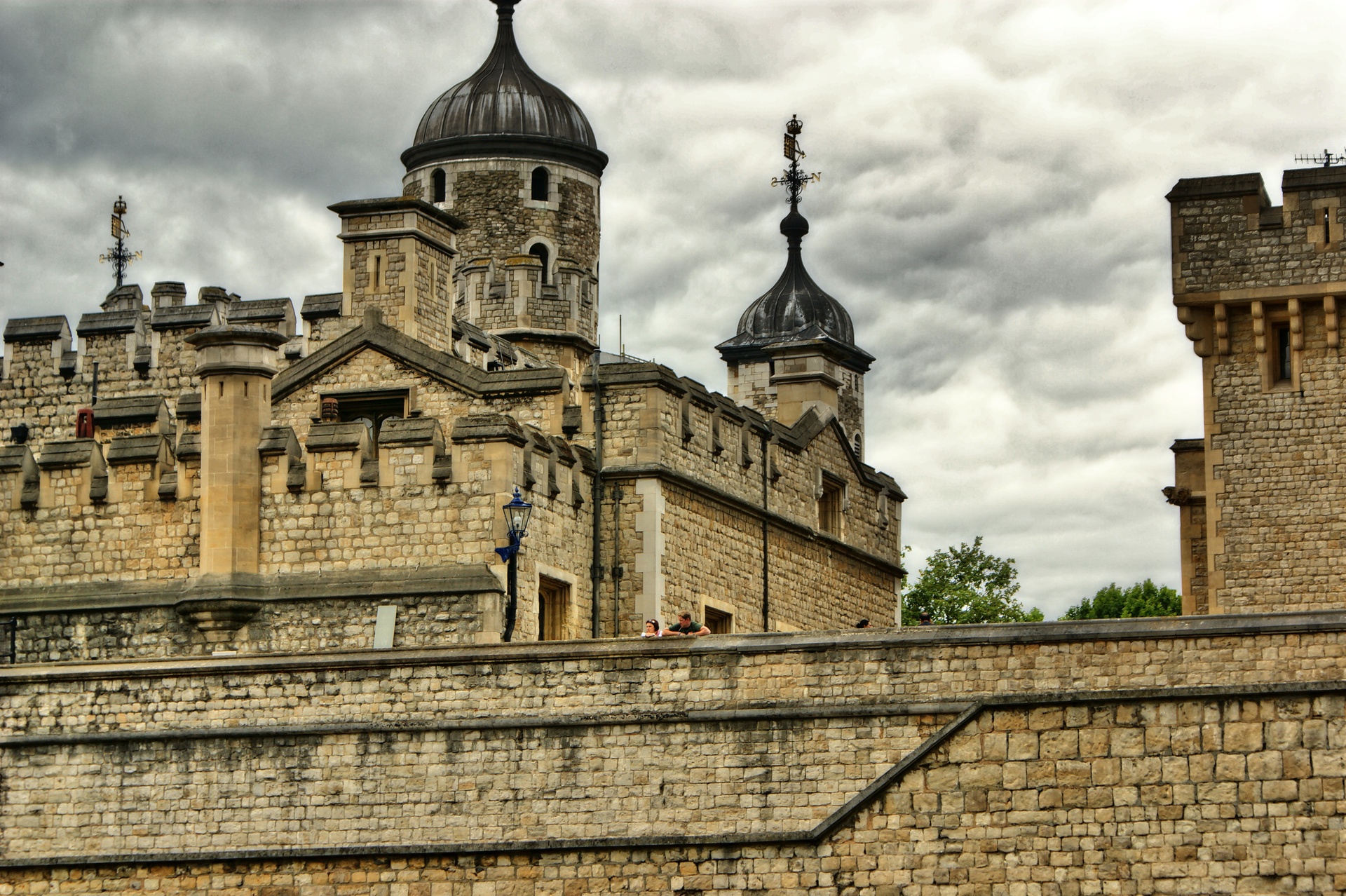
Tower of London
William the Conqueror's White Tower, the Crown Jewels, the ravens and 900 years as a royal fortress, prison and place of execution. Expensive and crowded, but historically the most important castle in England. Full guide: Tower of London – an honest guide.
Windsor Castle
The largest and oldest occupied castle in the world, still a working royal residence. See our honest Windsor guide.
Dover Castle, Kent
The "key to England" above the white cliffs: Henry II's great tower, a Roman lighthouse, a Saxon church and the Second World War tunnels where the Dunkirk evacuation was planned. English Heritage, about £20–30 depending on the day. More on our Canterbury and Kent coast page.
Rochester Castle, Kent
One of the tallest Norman keeps in England, roofless and floorless, so you look straight up through four storeys of stone. King John undermined one corner in 1215 using the fat of 40 pigs to fire the props. Cheap, central and close to London by train.
Bodiam Castle, East Sussex
The picture-book castle: a square shell with round towers rising from a moat, built in the 1380s. Inside it is a ruin. National Trust.
Leeds Castle, Kent and Hever Castle, Kent
Leeds – nothing to do with the city – sits on islands in a lake and was a palace of medieval queens; Hever was the childhood home of Anne Boleyn. Both are privately run, polished and pricey, with gardens and family attractions.
Arundel Castle, West Sussex
Home of the Dukes of Norfolk, largely rebuilt by the Victorians in Gothic style, with fine gardens. Open in summer only.
The South-West
Corfe Castle, Dorset
Jagged ruins on a hill above a stone village, blown apart by Parliament in 1646 after Lady Mary Bankes held it for the King. National Trust; the Swanage steam railway stops below it.
Tintagel Castle, Cornwall
A 13th-century castle on a headland linked to the legend of King Arthur – the castle itself was built centuries after any "Arthur" could have lived. A footbridge now crosses the gap to the island. English Heritage; timed tickets in summer, and many steps.
St Michael's Mount, Cornwall
A castle and former priory on a tidal island, reached on foot across a causeway at low tide or by boat. Still home to the St Aubyn family; National Trust.
Pendennis Castle, Cornwall
Henry VIII's artillery fort guarding Falmouth harbour – see our coastal towns guide.
Restormel Castle, Cornwall
A near-perfect circle of stone on a hill near Lostwithiel, small and peaceful.
The Midlands and the Welsh border
Warwick Castle
Complete, spectacular – and a theme park. Run by Merlin Entertainments with jousting, a trebuchet, the Horrible Histories-style dungeon and a huge gate price that falls sharply if you book online. Honestly worth it for families; frustrating for history lovers.
Kenilworth Castle, Warwickshire
A red sandstone ruin of enormous scale where Robert Dudley entertained Elizabeth I for 19 days in 1575. It survived one of the longest sieges in English history in 1266. English Heritage. Near Stratford-upon-Avon.
Ludlow Castle, Shropshire
A great border castle in one of England's best small towns; the princes later murdered in the Tower grew up here. Privately owned, reasonably priced.
Stokesay Castle, Shropshire
Not really a castle but a fortified manor house of the 1280s, with a timber-framed gatehouse – one of the best-preserved medieval houses in England. English Heritage.
Goodrich Castle, Herefordshire
A red ruin above the River Wye, battered by the Civil War cannon "Roaring Meg", which is displayed on site.
The North
Bamburgh Castle, Northumberland
On a rock above miles of empty beach, the seat of the Anglo-Saxon kings of Northumbria, restored in the late 19th century by the industrialist Lord Armstrong. Privately owned; about £18 for adults, plus parking.
Alnwick Castle, Northumberland
Home of the Percy family, Dukes of Northumberland, for over 700 years, and famous as Hogwarts in the early Harry Potter films. About £23 for adults; 20% off if you arrive by bus or train. Closed in winter.
Dunstanburgh and Warkworth, Northumberland
Dunstanburgh is a huge ruin on a lonely headland, reached only on foot along the coast from Craster – one of the great castle walks in England. Warkworth is a well-preserved Percy castle above a river loop.
Durham Castle
Part of a World Heritage Site with the cathedral and now a college of Durham University – visits by guided tour only.
Richmond and Conisbrough, Yorkshire
Richmond has one of the oldest stone curtain walls in Britain over the River Swale; Conisbrough's round keep inspired Walter Scott's Ivanhoe.
Lancaster Castle
A Norman castle that was a working prison until 2011 and still holds a crown court. The Pendle "witches" were tried here in 1612. Guided tours only. Read it with our page on Lancaster, Britain's forgotten slave port.
Carlisle Castle
The border fortress fought over by English and Scots for centuries; its dungeon walls carry the "licking stones" where thirsty Jacobite prisoners licked moisture in 1746. English Heritage.
East Anglia
Framlingham Castle, Suffolk, has a complete circuit of 13 towers you can walk on top of; Mary Tudor gathered her army here in 1553 before taking the throne. Orford Castle, Suffolk, has an unusual polygonal keep of the 1160s, almost intact. Norwich Castle, a Norman keep turned museum, has been through a long restoration of its interior. Castle Rising, Norfolk, has one of the finest Norman keeps in England inside enormous earthworks.
Castles you can visit for free
Dozens of English Heritage and council-owned ruins are unstaffed and open free in daylight hours. Among them: Berkhamsted Castle in Hertfordshire, where the English submitted to William the Conqueror in 1066; Wolvesey Castle, the ruined palace of the bishops of Winchester; and Bramber Castle in West Sussex. Many castle mounds, town walls and gatehouses cost nothing to walk around – York's walls are the best example, see our York guide. Check the English Heritage website for the full list of free sites.
Castles and empire: the word that travelled
The English idea of the castle travelled with English trade. On the coast of what is now Ghana, the forts where captive Africans were held before shipment across the Atlantic were called castles too: Cape Coast Castle, the headquarters of the Royal African Company and later of British rule on the Gold Coast, and Elmina Castle, built by the Portuguese in 1482 and taken by the Dutch. They look like European castles because they were built by Europeans – but their dungeons held people for sale.
At home, some of the grandest "castles" were built or rebuilt with colonial money. Penrhyn Castle in North Wales, a 19th-century fantasy Norman castle, was paid for by Jamaican sugar and Welsh slate. Lord Armstrong, who restored Bamburgh, made his fortune manufacturing guns and warships sold around the world. See also our pages on the Royal African Company and the Gold Coast forts and stately homes.
Saving money on English castles
- Book online – English Heritage, Warwick, Alnwick and most private castles are cheaper in advance, and timed slots at Tintagel and the Tower can sell out.
- Visit off-peak – English Heritage's off-peak tickets on weekdays and in winter can be several pounds cheaper.
- Count your visits – if you plan four or more English Heritage sites, an annual membership or the Overseas Visitor Pass usually pays for itself.
- Go by public transport – Alnwick gives 20% off with a bus or train ticket.
- Bring cash and card – some sites are now card-only, while car parks in remote places may only take coins or an app.
Castle tours
Day tours from London reach Windsor, Leeds Castle, Dover and Warwick; tours from Edinburgh and Newcastle cover Bamburgh and Alnwick.
Tours and experiences
Entrance fees are included in the tour price; tips are not included but are always welcome.
Read next
Our honest ranking by history, architecture, preservation and setting.
Wales region by region, with free and paid badges.
Fountains, Rievaulx, Whitby – and the houses built on abbey land and slavery.
England's most important castle, without the hype.
All our guides to England, Wales, Scotland and Northern Ireland.
The castles on the other coast
To see the castles where Britain's slave trade began and ended for millions of Africans, visit our partner sites Cape Coast Castle, Elmina Castle and James Fort, Accra – the English-built fort that gave Jamestown in Accra its name.
The African side of the story
Britain Adventures is an independent partner website. Our partner sites on Africa and its history are where the stories on this page continue:
- Pan-African: African Independence · Uganda · Egypt · Sierra Leone · All African Radio Stations
- Ghana: Ghana-Net · Cape Coast Castle · Elmina Castle · James Fort, Accra · They Made Ghana · War Cemetery Cape Coast
- Across Africa: Kenya Web News · Explore Nigeria · Gambia Vibes · Zambia Vibes
- European history: V2 Rocket and Peenemünde · Tannenberg Memorial
Search our Network. Start here.
After a day out to see the castles, relaxing time at an Irish British Pub